Top 10 Benefits of Using Compostable Paper Plates for Food Service
In recent years, the food service industry has seen a significant shift towards sustainability. Among various options, "Compostable Paper Plates" have gained prominence. Expert Jane Smith, a leading authority in sustainable food service solutions, states, “Choosing compostable materials is not just a trend; it’s an essential step toward a sustainable future.”
Compostable Paper Plates offer numerous benefits that extend beyond environmental concerns. They help reduce waste, cut down on plastic usage, and encourage responsible disposal practices. As restaurants and caterers adopt these products, they contribute to a circular economy. However, some may hesitate due to perceived costs or durability issues.
While the initial investment may be higher, the long-term benefits can outweigh the concerns. Compostable Paper Plates help meet customer demand for eco-friendly options. This leads to increased customer loyalty and potentially higher sales. Embracing this change requires both commitment and a willingness to adapt. The journey toward sustainability can be challenging, but each step counts.

Advantages of Compostable Paper Plates Over Traditional Options
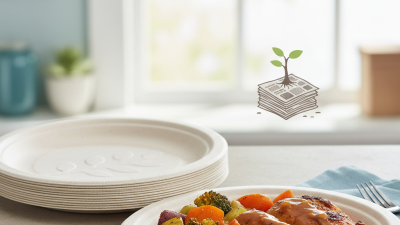
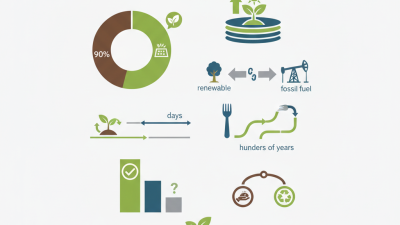
Compostable paper plates offer significant advantages over traditional plastic or Styrofoam options. According to a report by the Foodservice Packaging Institute, using compostable materials can reduce landfill waste by 30%. These plates break down naturally, returning nutrients to the soil, which benefits the environment. They are made from renewable materials like bagasse and wheat straw, making them a more sustainable choice.
In food service, sustainability is increasingly vital. A study by the EPA highlights that an estimated 32 million tons of plastic waste were generated in 2020 alone. By switching to compostable options, food service businesses can play a role in mitigating this crisis. However, some establishments worry about the durability of compostable plates. While they hold up under typical use, concerns remain for items with heavy or wet foods.
Some consumers express hesitance about cost. Compostable plates can be pricier than their plastic counterparts. Yet, the environmental benefits often outweigh the initial investment. Sustainable practices may enhance a brand's image, attracting eco-conscious customers. This dual benefit of environmental responsibility and potential business growth is hard to ignore.
Top 10 Benefits of Using Compostable Paper Plates for Food Service
Environmental Benefits of Compostable Paper Plates for Food Service
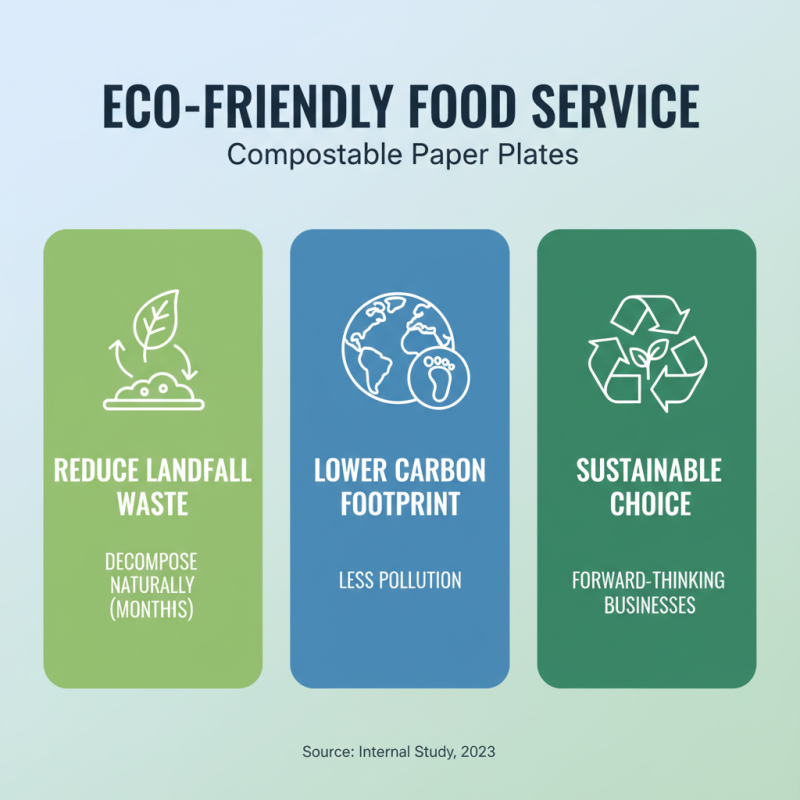
Compostable paper plates are a game changer for food service. They decompose naturally, reducing landfill waste. Using these plates can significantly lower your carbon footprint. Unlike traditional plates, compostable options break down in a matter of months. This makes them an eco-friendly choice for environmentally conscious businesses.
When we serve food on compostable plates, we contribute to a circular economy. These plates support sustainable practices by returning valuable nutrients to the soil. This helps combat pollution and promotes healthier ecosystems. However, it's essential to check local composting facilities. Some areas may lack the infrastructure for proper disposal.
Compostable plates have limitations. They may not perform well with very hot or oily foods. Some customers might not understand their benefits, leading to confusion. Despite these challenges, the environmental advantages are clear. These plates can help reduce plastic waste and promote a greener planet. Embracing compostable options shows a commitment to sustainability.
Cost Effectiveness of Using Compostable Paper Plates in Catering
Using compostable paper plates in catering offers a unique approach to sustainability without sacrificing cost-effectiveness. These plates break down naturally, reducing landfill waste. Many caterers find that using compostable options can lower long-term costs. Traditional plastic or styrofoam plates often incur disposal fees. Compostable plates may have a higher upfront cost, but the savings in disposal fees add up quickly.
Moreover, compostable paper plates cater to the growing demand for eco-friendly solutions. Customers increasingly prefer businesses that prioritize sustainability. Catering companies can enhance their image by switching to compostable products. It shows commitment to environmental responsibility, which can attract more clients. However, some chefs worry about durability or performance. Testing different brands can provide insight into which options meet performance standards without compromising quality.
There’s also the issue of consumer education. Many people don’t understand how compostable materials work. Catering teams need to communicate the benefits. Clear labeling can help guests know how to dispose of the plates correctly. Without proper education, the effectiveness of compostable plates may be lost, and food service could miss out on their potential benefits.
Top 10 Benefits of Using Compostable Paper Plates for Food Service
| Benefit |
Description |
Cost Impact ($) |
| Eco-Friendly |
Made from renewable resources, reducing environmental impact. |
-0.20 |
| Cost-Effective |
Lower disposal costs compared to plastic plates. |
-0.15 |
| Customizable |
Easily customizable for branding and events. |
+0.10 |
| Durability |
Sturdy design suitable for hot and cold foods. |
0 |
| Healthier Alternative |
Free from harmful chemicals found in plastics. |
-0.05 |
| Convenient |
Lightweight and easy to transport for catering services. |
0 |
| Composting |
Can be composted, contributing to waste reduction. |
-0.25 |
| Versatility |
Suitable for various types of food service. |
0 |
| Positive Brand Image |
Enhances your company's commitment to sustainability. |
0 |
| Availability |
Widely available in different sizes and shapes. |
0 |
Health and Safety Considerations with Compostable Paper Plates
Compostable paper plates are gaining traction in food service for their health and safety benefits. Unlike traditional plastic plates, compostable options are made from natural materials. These plates break down into non-toxic compost, reducing landfill waste. A study by the Food Packaging Forum found that compostable materials minimize harmful chemical leachates, which can contaminate food.
Health safety is paramount in food service. Compostable plates are generally free from harmful substances like BPA and phthalates. This makes them a safer choice for consumers. According to a report by the Biodegradable Products Institute, proper composting can eliminate pathogens and harmful bacteria. This contributes to safer dining experiences, especially in outdoor events where sanitation is a concern.
Despite their benefits, challenges persist. Not all compostable plates perform equally. Some require specific facilities for composting, limiting their effectiveness. Education around proper disposal methods is crucial. Without awareness, compostable plates may end up in landfills, countering their intended purpose. Food service operators must weigh these factors when choosing compostable options to ensure health, safety, and environmental responsibility.
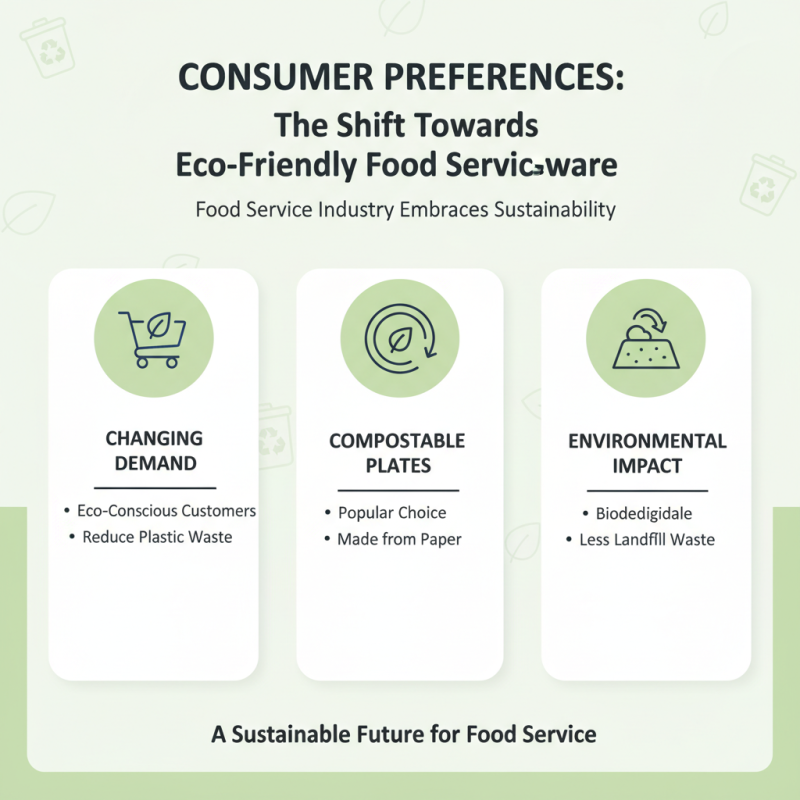
Consumer Preferences: The Shift Towards Eco-Friendly Food Serviceware
The food service industry is witnessing a shift towards more eco-friendly practices, driven by changing consumer preferences. Compostable paper plates have become popular among environmentally conscious customers. These plates are not just a trend; they represent a commitment to reducing plastic waste. Their biodegradability ensures a lesser impact on landfills.
Many consumers are choosing eco-friendly options not only for the environment but also for their health. Traditional disposable plates often contain harmful chemicals. Compostable alternatives provide peace of mind, allowing customers to enjoy their meals without the worry of toxic leaching. Many establishments highlight this eco-friendly choice in their marketing, attracting more patrons.
Tips: When planning to switch to compostable plates, ensure proper disposal methods are in place. Educate your staff on waste separation for maximum sustainability. Keep in mind that consumers appreciate transparency. Share information about your eco-friendly choices to build trust and loyalty. By embracing these changes, businesses can align with the growing consumer demand for sustainability.