How to Choose the Best Disposable Boxes For Food?
Choosing the right disposable boxes for food is crucial in today's fast-paced industry. The food packaging market is projected to reach $476 billion by 2026, highlighting its significance in food safety and sustainability. The growing demand for convenience drives the need for effective, eco-friendly solutions.
Industry expert Dr. Emily Johnson states, "Selecting the right disposable boxes for food not only affects freshness but also impacts customer perception." This emphasizes the importance of quality in packaging. Brands must consider materials, size, and functionality when choosing disposable boxes for food.
Some options are biodegradable, while others are less environmentally friendly. There are intricate details to weigh in, like resistance to grease, moisture, and temperature. Often, decisions come down to costs and availability, leading some to overlook quality. It’s crucial to strike a balance between cost-effectiveness and reliability. The wrong choice may lead to damaged products and dissatisfied customers. In this competitive market, making informed decisions about disposable boxes for food is essential.
Understanding Different Types of Disposable Food Boxes
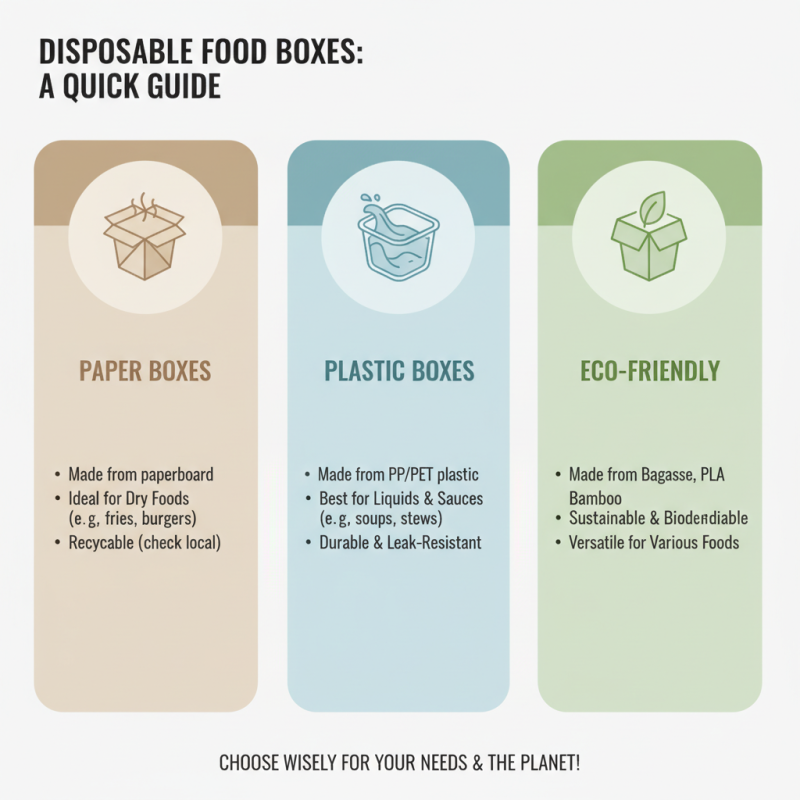
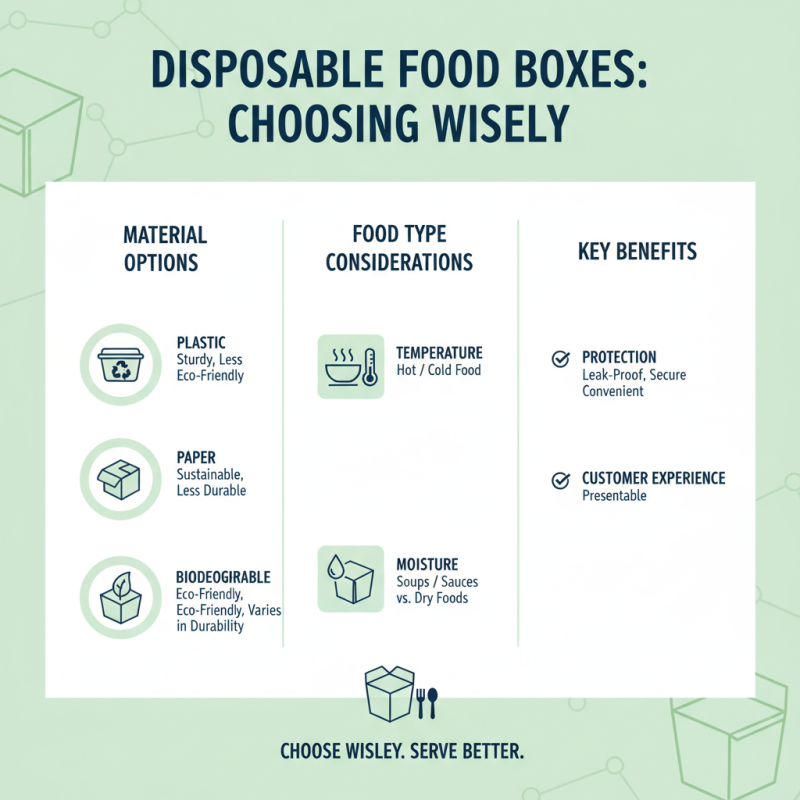
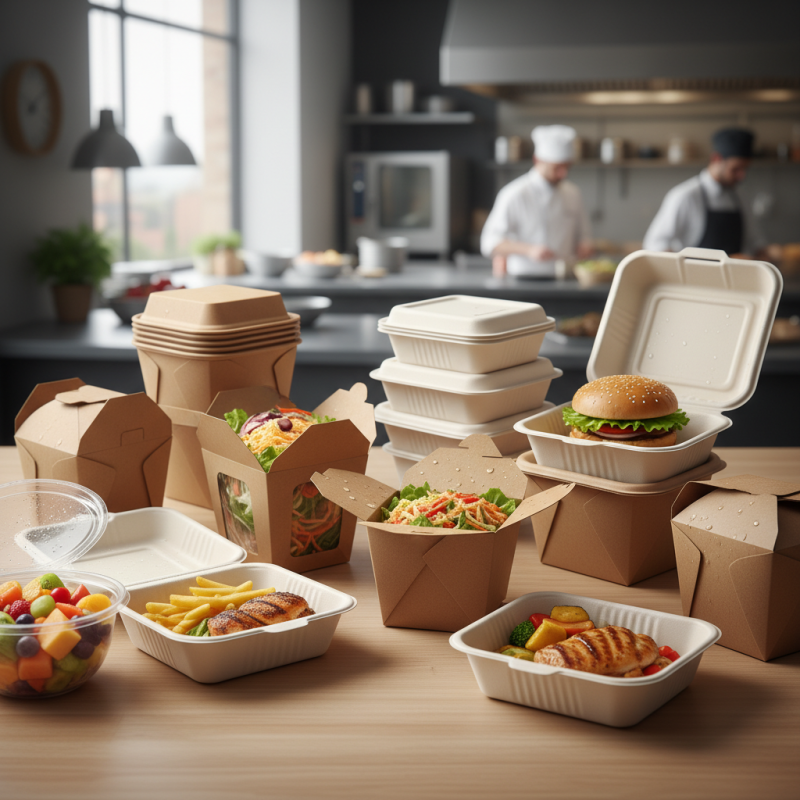
When selecting disposable food boxes, understanding the types available is crucial. There are various options, each designed for specific food items. For instance, there are boxes made of paper, plastic, and eco-friendly materials. Paper boxes are often used for dry foods, while plastic is better for liquids. Eco-friendly options are gaining popularity due to their sustainability.
Each type has unique characteristics. Paper options are lightweight and often biodegradable, but they can leak if exposed to moisture. Plastic boxes are sturdy and versatile, yet they contribute to plastic waste. Eco-friendly containers might cost more, but they appeal to environmentally conscious consumers. Reflecting on these options helps in making better choices for food packaging.
The size and shape of disposable boxes also matter. Some foods require deeper boxes to prevent spillage. Others need smaller, compartmentalized containers for segregation. It's important to consider these aspects to avoid messy situations. We sometimes overlook these details, which can lead to issues in packaging. An informed choice can enhance the dining experience and reduce waste.
Key Factors to Consider When Choosing Disposable Food Boxes
When choosing disposable boxes for food, several key factors come into play. One important aspect is material. Boxes can be made from plastic, paper, or biodegradable options. Each has its benefits. For example, plastic is sturdy but less eco-friendly. Paper boxes are more sustainable but can be less durable. Evaluating the food type you serve is essential. You'll want to ensure the material can handle the temperature and moisture of the food.
Think about size and shape too. Available options range from small containers for desserts to larger boxes for entrees. A well-sized box prevents spills and maintains the food's integrity. Remember that presentation matters. Customers appreciate an attractive, clean look. Simple designs can elevate a meal. However, striking a balance between aesthetics and functionality is crucial. Reflect on what serves your brand best.
Tips: Always conduct a test run before purchasing in bulk. This helps prevent costly errors. Look for reliable suppliers who offer samples. A small investment can save you time and ensure quality. Don't rush; take your time in decision-making. Explore various options to find what truly meets your needs.
Assessing Material Quality and Safety for Food Packaging
When selecting disposable boxes for food, material quality plays a crucial role. Many options exist, including paper, plastic, and biodegradable materials. Each has its advantages. For instance, paper boxes are often eco-friendly. However, they may not be suitable for wet or greasy foods.
Food safety is an essential factor. Make sure the materials are food-grade. Look for certifications that ensure they are safe for direct contact with food. Sometimes, lower-quality plastic can leach harmful substances. This is a concern if boxes are heated in the microwave.
Consider how the boxes will perform in real-life situations. Will they hold up during transport? Are they stackable or do they take too much space? Reflection on these questions helps in making better choices. Always think about the end-user experience, too. Will the box make it easy to eat or store leftovers?
Evaluating Size and Capacity for Different Food Items
When selecting disposable boxes for food, size and capacity play crucial roles. Many food items come in various shapes and portions. According to a recent report from the Food Packaging Association, 85% of consumers prefer containers that fit their meal sizes perfectly. For example, a typical sandwich may need a box of at least 7 inches. However, many disposable options are either too large or too small.
Understanding the capacity of these boxes can be tricky. Studies show that around 30% of food waste occurs due to improper sizing. Smaller boxes might not accommodate larger meals, while excessively big boxes can lead to unwanted space. For salads, a 32-ounce capacity is often ideal, but many choices offer less. It’s frustrating to find the right fit.
Consumer feedback frequently highlights concerns about portion control and portion sizes. Many products fail to meet the needs of various cuisines. Inconsistent sizing can impact food storage and transport. Gathering proper data on common food sizes is essential for making informed choices. Sometimes, the best solutions come from trial and error, reflecting personal preferences and needs.
Eco-Friendly Options: Choosing Sustainable Disposable Box Solutions
Choosing eco-friendly disposable boxes for food can be challenging. It's vital to consider materials that minimize environmental impact. Boxes made from recycled paper or plant-based materials are preferable. They break down naturally, reducing landfill waste. Many options are sturdy and can handle hot or cold food.
Look for certifications that guarantee sustainability. Not all "biodegradable" labels are equal. Some products can still take years to decompose. Researching and identifying truly sustainable brands takes time. Many consumers overlook this step.
Another point to reflect on is the potential for waste. Consider the size of the boxes. Oversized containers lead to unnecessary waste. The right size can save resources. Each choice impacts the environment. It's about making conscious decisions that lead to better practices.
How to Choose the Best Disposable Boxes For Food? - Eco-Friendly Options: Choosing Sustainable Disposable Box Solutions
| Material Type |
Biodegradability |
Durability |
Suitable For |
Temperature Resistance |
| Bamboo |
Yes, 100% biodegradable |
High |
Hot and cold foods |
Up to 200°F |
| Sugarcane (Bagasse) |
Yes, compostable |
Medium |
Savory and sweet dishes |
Up to 190°F |
| Recycled Paper |
Yes, can be recycled |
Low to medium |
Dry foods, pastries |
Up to 160°F |
| PLA (Cornstarch) |
Yes, compostable |
Medium |
Chilled and dry items |
Up to 120°F |
| Palm Leaf |
Yes, biodegradable |
High |
All food types |
Up to 200°F |