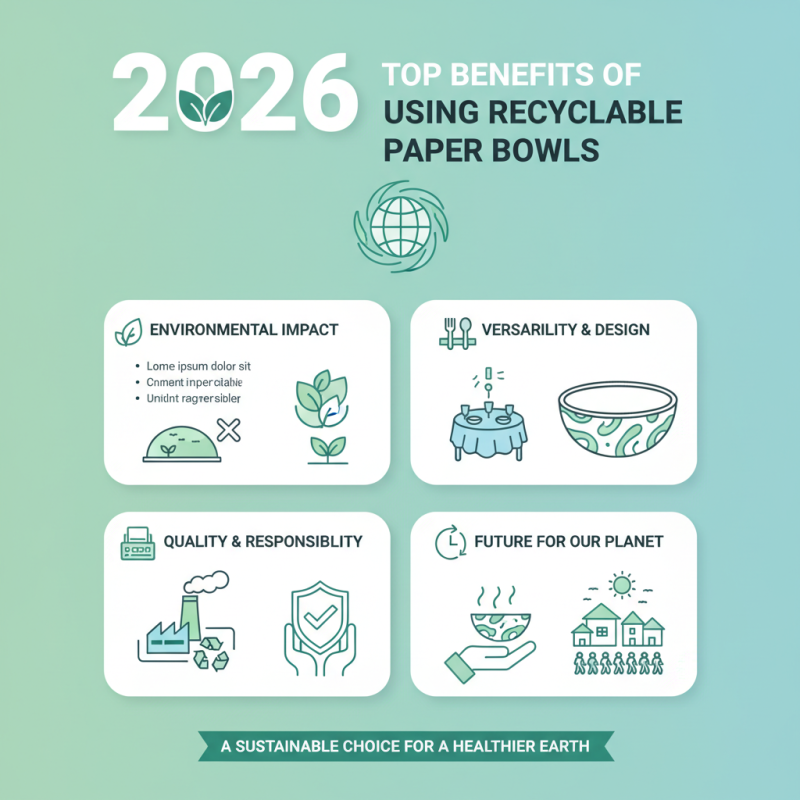
2026 Top Benefits of Using Recyclable Paper Bowls?
In recent years, the demand for eco-friendly alternatives has skyrocketed. The Recyclable Paper Bowl stands at the forefront of this movement. Many people are becoming more aware of environmental issues. Traditional plastic bowls contribute to pollution and waste. In contrast, recyclable options like paper bowls provide a sustainable solution.
Recyclable Paper Bowls are lightweight and versatile. They serve well in various settings, from parties to casual meals. Their design often incorporates environmentally-friendly inks. However, not all paper bowls are created equal. Some may not break down as efficiently once disposed of. It's crucial to choose high-quality products for maximum benefits.
Using recyclable materials reflects an individual’s commitment to sustainability. Yet, the transition to such products requires effort and awareness. Some may still prefer conventional choices out of habit. Educating others about the advantages of the Recyclable Paper Bowl can foster change. This shift is not just a trend; it’s essential for our planet's health.
Advantages of Using Recyclable Paper Bowls in Everyday Life
Recyclable paper bowls offer numerous advantages in our daily lives. A report by the Paper and Paperboard Packaging Environmental Council states that over 70% of paper products in the U.S. are recycled. This demonstrates a commitment to sustainability.
Paper bowls are made from renewable resources, reducing the reliance on fossil fuels. They decompose much faster than plastic alternatives, typically breaking down within 30 to 60 days in commercial composting facilities.
Using recyclable paper bowls also promotes hygiene. These bowls are often single-use, which helps minimize cross-contamination. For instance, studies suggest that using disposable items can reduce the spread of certain pathogens in food service settings. Yet, one must remain aware of the environmental impact of the production process. Not all paper bowls are created equally. Some contain coatings that hinder recycling efforts, leading to confusion and waste. It's crucial to check for certifications or recycle symbols.
Moreover, convenience plays a key role. Paper bowls are lightweight and easy to carry, ideal for events, picnics, or takeout. However, they may not always be as sturdy as plastic counterparts. Users might find them less reliable for heavier foods. Balancing convenience with environmental responsibility is important. As awareness increases, the demand for truly sustainable products will shape future options in packaging.
Environmental Impact of Recyclable Paper Bowls versus Plastic Alternatives
The comparison of recyclable paper bowls and plastic alternatives brings important environmental questions to light. According to the EPA, around 27 million tons of plastic waste end up in landfills each year. Plastic can take hundreds of years to decompose, leading to pollution in our oceans and damage to wildlife. In contrast, recyclable paper bowls can often break down in just a few months under the right conditions.
Recyclable paper products are made from renewable resources. This means they have a lower carbon footprint. A report from the Paper and Paperboard Packaging Environmental Council highlights that using recyclable paper can reduce greenhouse gas emissions by up to 60%. While paper production requires energy, it typically consumes less than plastic production does. However, the industry still faces criticism due to deforestation and energy usage.
The impact of consumer choices is significant. Transitioning to recyclable options can reduce plastic reliance in our daily lives. Awareness of recycling practices is crucial too. A 2021 study revealed only 34% of paper products are recycled. This calls for improvement in recycling education. It’s not just about switching materials; it's about fostering a culture of responsible consumption.
Economic Benefits of Switching to Recyclable Paper Bowls
The shift to recyclable paper bowls presents significant economic advantages for businesses. According to a recent industry report, companies that adopt recyclable packaging can reduce their waste management costs by up to 30%. This reduction stems from lower disposal fees and less frequent pickups. Additionally, consumers are increasingly favoring eco-friendly products, boosting sales for businesses that prioritize sustainability.
Another key aspect is operational efficiency. Switching to recyclable paper bowls can streamline production processes. Many manufacturers report that using recyclable materials simplifies their supply chain. This often leads to reduced transportation costs. Furthermore, the potential for government incentives can provide additional financial relief. Programs aimed at promoting sustainability could offset initial investment costs.
However, it's essential to address the challenges faced during this transition. Not all recyclable paper bowls perform equally in terms of durability and cost. Some businesses may struggle with the upfront costs of switching, causing hesitation. Moreover, consumer education about recycling practices remains crucial. Without proper awareness, the benefits may not be fully realized.
Innovative Uses for Recyclable Paper Bowls in Food Service Industry
Recyclable paper bowls are making waves in the food service industry. These bowls are lightweight and easy to handle. They come in various sizes, making them perfect for salads, soups, and snacks. One innovative use is for food trucks. They can serve dishes quickly while being eco-friendly. Customers appreciate the sustainable choice.
Another creative application is at events and festivals. Sturdy paper bowls hold hot food and reduce cleanup time. Additionally, they can be customized with vibrant designs, making them visually appealing. However, some may question their durability when serving heavy meals. It’s a balancing act to ensure functionality and sustainability.
Recyclable paper bowls also have the potential for composting, promoting waste reduction. Still, food service providers must train staff on proper disposal methods. Misplaced waste can negate eco-friendly efforts. Embracing these bowls necessitates full commitment from the entire team. This synergy leads to a more sustainable food service environment.
2026 Top Benefits of Using Recyclable Paper Bowls in Food Service Industry