How to Choose the Best Disposable Boxes For Food Quality?
Choosing the right disposable boxes for food can significantly impact your culinary presentation and safety. With many options available, it’s vital to understand the specific qualities that make these boxes effective. High-quality disposable boxes for food protect items from contamination while ensuring freshness. They come in various materials, including biodegradable options.
When selecting disposable boxes, consider size, durability, and insulation properties. The right choice not only enhances the food's appearance but also preserves its taste. It's about balancing functionality with sustainability. Unfortunately, some products may fall short in these areas, leading to waste or compromised food quality, which is frustrating.
Many businesses overlook the importance of certification and safety standards. Ensuring that disposable food boxes meet industry regulations is crucial. Consumers deserve to know that their food is contained in safe and reliable packaging. Reflecting on these factors can lead to better choices for both the environment and your customers.
Factors to Consider in Choosing Disposable Food Boxes for Quality Protection
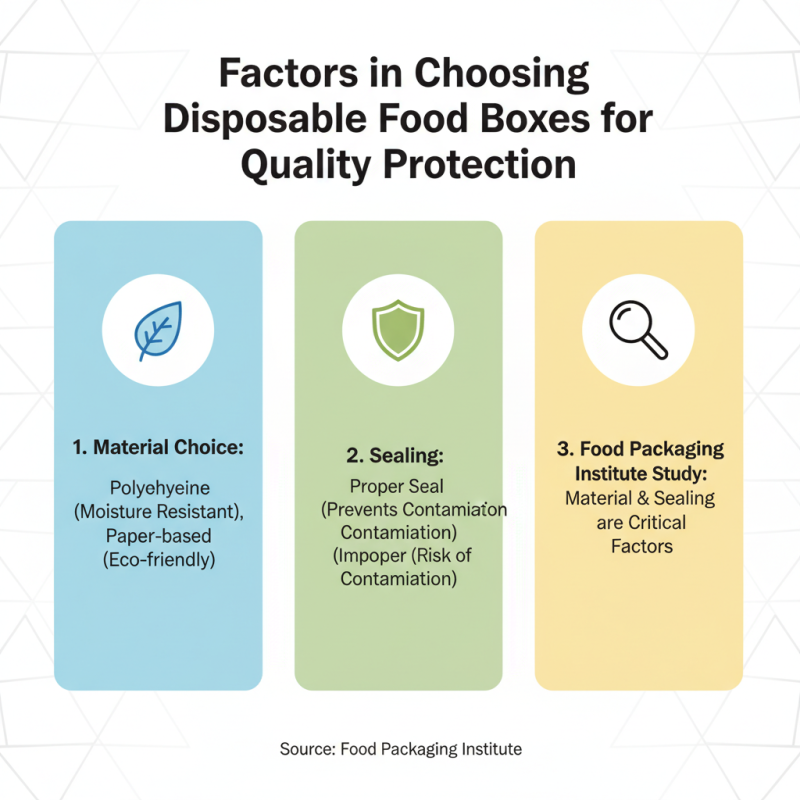
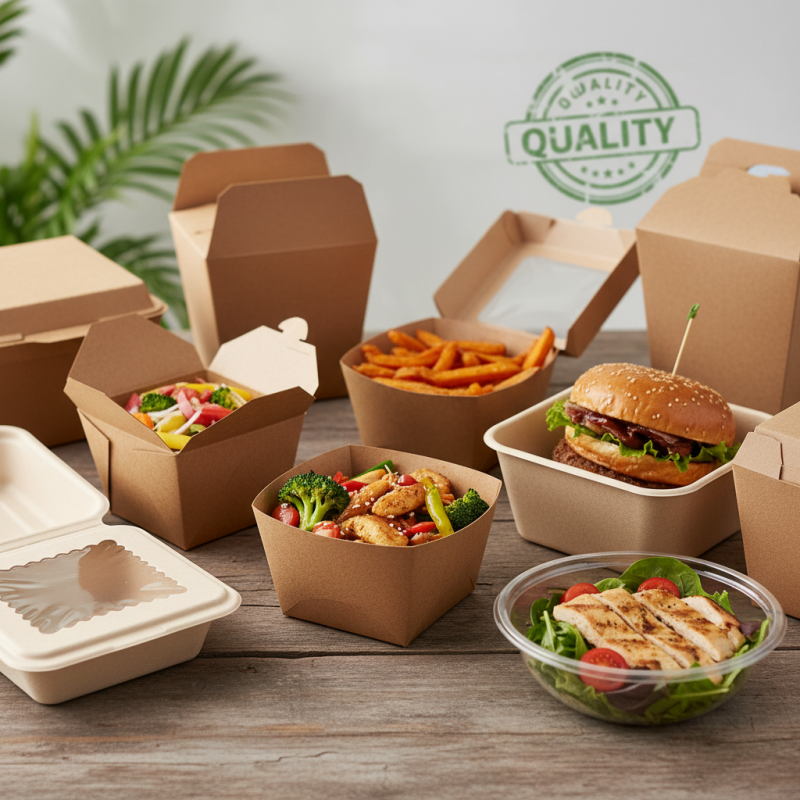
When selecting disposable food boxes, several factors impact food quality protection. A study by the Food Packaging Institute shows that material choice plays a critical role. For instance, polyethylene containers offer decent moisture resistance, while paper-based boxes are more eco-friendly. However, improper sealing can lead to food contamination.
Temperature control is another vital factor. According to the American Journal of Food Safety, food must be stored at specific temperatures to prevent spoilage. Disposable containers that withstand temperature variations can help maintain food integrity. Poor insulating properties may compromise quality. Many food boxes fail under extreme conditions, leading to reduced shelf life.
Design features are equally important. Look for boxes with secure lids to limit air exposure. A report from the Institute of Packaging Professionals notes that boxes designed for stacking can save space and prevent crushing. Yet, not all designs are created equal. It's essential to balance convenience and sturdiness while ensuring usability. A flimsy box might save cost, but it risks compromising the food's quality and safety.
Material Types: Comparing Plastic, Paper, and Biodegradable Options
When selecting disposable boxes for food, the choice of material significantly impacts both food quality and environmental sustainability. Plastic containers are durable and versatile, often used for their leak-proof designs. However, studies show that certain plastics can leach chemicals into food, especially when heated. The FDA has set limits on these substances, but concerns about long-term health effects remain.
Paper boxes provide a more eco-friendly alternative. They are biodegradable and can be sourced from renewable resources. A report from the Paper and Packaging Board indicates that nearly 70% of consumers prefer packaging made from paper. This preference reflects a growing awareness of environmental issues. However, paper boxes may not always provide the same moisture barrier as plastic. This can affect food freshness and quality.
Biodegradable options are on the rise. These materials often combine the best features of plastics and paper, breaking down naturally without leaving harmful residues. The Biodegradable Products Institute states that the market for biodegradable packaging is expected to grow significantly, driven by consumer demand. Still, skepticism exists about the efficiency of composting facilities. Incomplete decomposition can lead to waste, raising questions about their ultimate effectiveness. Understanding these materials helps in making informed choices that balance quality and sustainability.
Understanding Food Safety Standards in Disposable Packaging Choices
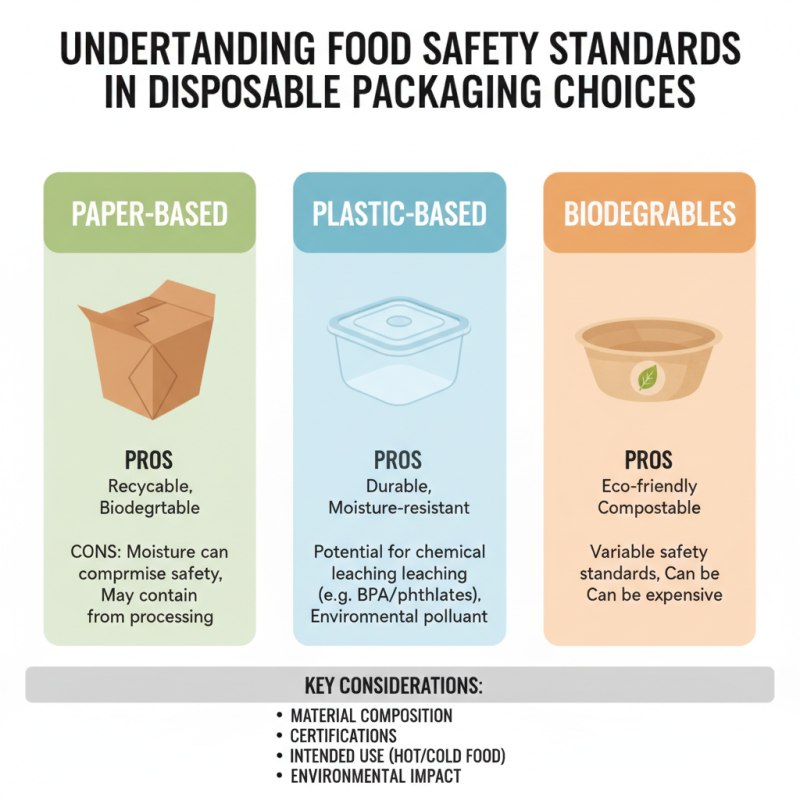
Food safety standards are crucial when selecting disposable packaging for food. Understanding the materials used in these boxes is the first step. Many disposable options are made from paper, plastic, or biodegradables. Each material has its pros and cons regarding safety and environmental impact.
When considering food safety, check if the packaging is food grade. This certification ensures that materials won’t leach harmful substances into the food. Some plastics can release chemicals. This can happen when they are heated or in contact with acidic foods. Biodegradable options might seem eco-friendly but may not always meet safety standards. Always assess their certifications.
Another aspect is the design and durability of the packaging. Boxes that are too thin may not support the food properly. They can easily break, posing risks to food safety. Additionally, consider the sealing of these boxes. Poor sealing can allow contaminants to enter. Proper individual packaging can also reduce the chance of cross-contamination. Prioritize boxes that meet regulatory health standards. Always stay informed about the latest guidelines in food safety. This knowledge can guide effective choices for quality disposable food packaging.
Evaluating Insulation and Temperature Retention for Food Freshness
When selecting disposable boxes for food, insulation plays a critical role in preserving freshness. Studies show that food temperature can drop significantly within minutes if not insulated properly. According to the Food Packaging Association, adequate insulation can maintain food temperature for up to five hours. This is vital for both quality and safety.
The materials used in disposable boxes affect their thermal properties. For example, polystyrene and polyethylene are effective insulators, trapping heat or cold. However, not all materials offer the same performance. A report from the Institute of Packaging Professionals reveals that a composite design using multiple materials can outperform single-material solutions in insulation effectiveness.
It's essential to evaluate how these materials respond to different temperatures. Certain disposable boxes might be great for cold items but fail under heat. Reassessing the insulation choice ensures that food remains safe and tasty. Research indicates that improper insulation leads to food spoilage in 30% of takeout products. This highlights the need for careful consideration in choosing the right disposable boxes.
Cost-Effectiveness vs. Quality: Finding the Right Balance in Disposable Boxes
When selecting disposable boxes for food, cost-effectiveness and quality often clash. According to a study by the Food Packaging Institute, over 30% of food service businesses prioritize cost due to tight budgets. However, compromising on quality can lead to food spoilage or customer dissatisfaction. In fact, the same report highlights that 45% of consumers are likely to avoid brands offering low-quality packaging.
Quality disposable boxes play a crucial role in maintaining food temperature and freshness. Research from the Packaging Association indicates that well-designed boxes can enhance food safety and extend shelf life by up to 40%. While cheaper options may seem appealing, they often fail to offer the necessary protection against contamination. For instance, inadequate sealing can expose food to air, affecting taste and safety.
Moreover, environmental considerations are gaining traction. A report by Environmental Packaging International shows that 70% of consumers prefer eco-friendly packaging. This shift pushes businesses to rethink their choices. Quality materials might carry a higher upfront cost, but they can lead to better customer retention. Food safety incidents arising from poor packaging can damage brand reputation irrevocably. Reflecting on these parameters is crucial for a balanced decision.