How to Choose the Best Food Packaging Boxes for Your Business?
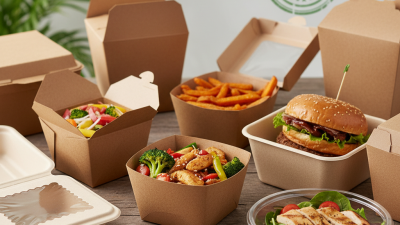
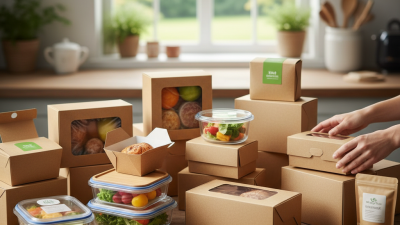
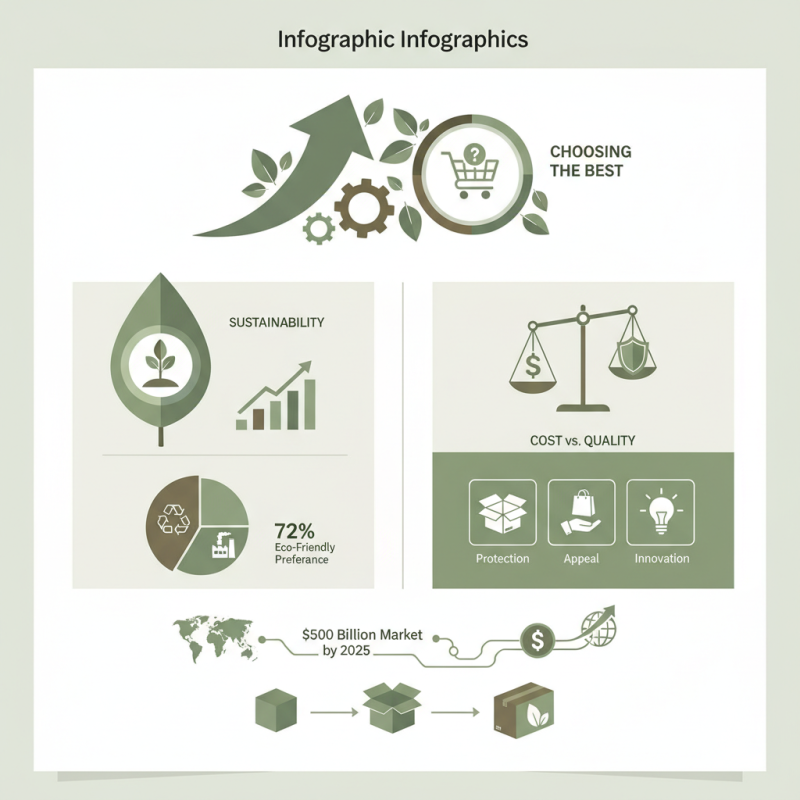
Choosing the right Food Packaging Boxes is crucial for any business in the food industry. As consumer preferences shift towards sustainable and convenient options, packaging plays a key role. According to a recent report by Smithers Pira, the global food packaging market is expected to reach $500 billion by 2025. This demonstrates the importance of effective packaging strategies.
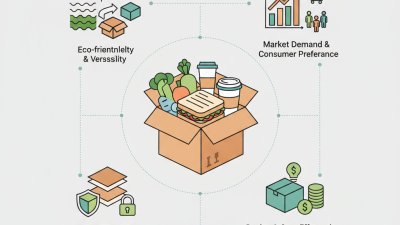
Food Packaging Boxes protect products and enhance their appeal. They also influence purchasing decisions. In a 2021 study, 72% of consumers said they prefer eco-friendly packaging. This highlights the need for businesses to consider sustainability when selecting packaging materials. However, navigating the diverse options can be challenging.
Many businesses grapple with balancing cost and quality. It’s essential to research materials, considering both environmental impact and product protection. Each type of Food Packaging Box has its strengths and weaknesses. Rigid boxes, for example, provide excellent protection but may come at a higher cost. Reflecting on these choices can significantly impact your brand’s image and customer satisfaction.
Understanding Your Packaging Needs Based on Food Type
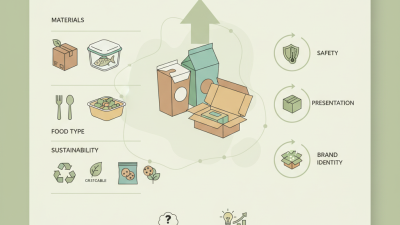
Choosing the right food packaging boxes is crucial. Your decision should align with the type of food you sell. Different foods require different packaging features, such as temperature control and barrier properties. For instance, fresh produce might need breathable materials, while frozen items require insulation.
When evaluating your packaging needs, consider the food's shelf life. Perishable products require materials that extend freshness. Moreover, the box should fit the portion size of your offerings. Oversized packaging can lead to wasted space and increased costs. Thoughtful design impacts perceived quality.
Tips: Always test your packaging with a small product batch. This helps you understand durability and customer appeal. Adjust designs based on feedback.
Use eco-friendly materials when possible. Consumers value sustainability today. Keeping abreast of packaging innovations can inspire efficiency and creativity, though be cautious of trends that may not fit your brand identity.
Exploring Materials for Food Packaging Boxes: Pros and Cons
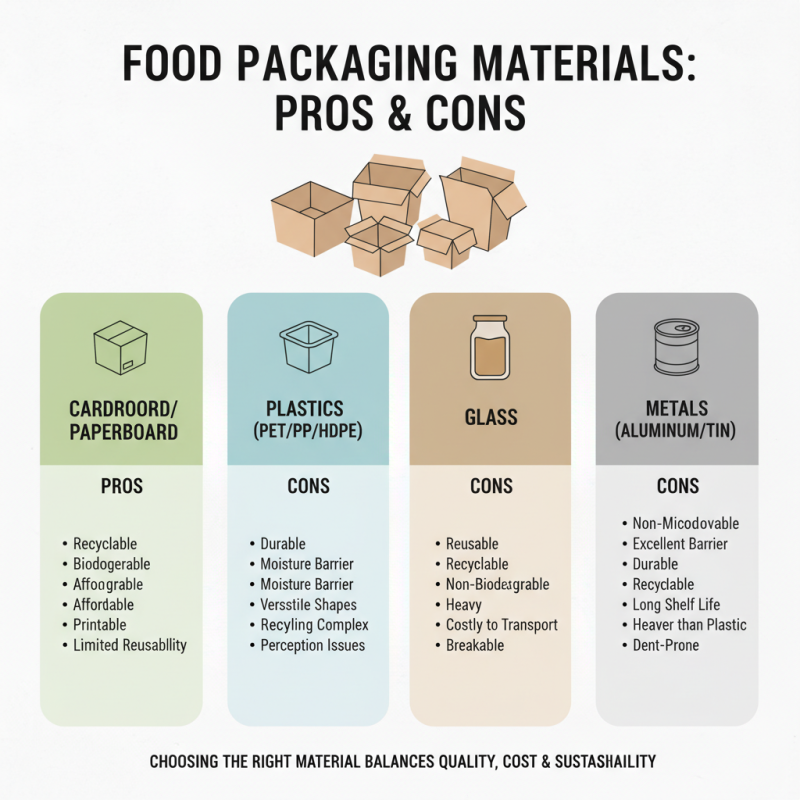
Food packaging boxes are crucial for maintaining product quality and appealing to consumers. Various materials come into play when selecting the right packaging. Each option has its advantages and challenges.
Cardboard is a popular choice due to its lightweight and recyclable nature. Approximately 70% of consumers prefer recyclable packaging, according to a 2021 study by the Food Packaging Forum. However, cardboard's moisture sensitivity can be a downside. It may not protect food items effectively in humid conditions. This could lead to spoilage, making it essential to assess the storage environment.
Plastic is another common packaging material. It offers excellent barrier properties, ensuring food remains fresh longer. A report from Smithers indicates that the global plastic food packaging market will reach $400 billion by 2024. However, plastic's environmental impact raises concerns. Biodegradable options exist but may be more costly. While they reduce pollution, their performance may not always match traditional plastics.
Metal packaging, like aluminum cans, is durable and offers long shelf-life. Statistics show that 75% of aluminum cans are recycled, showing high sustainability. Yet, the energy required for production is significant. Evaluating your target market and product needs is essential to making the best choice for your food packaging.
Assessing Size and Shape for Efficient Food Packaging
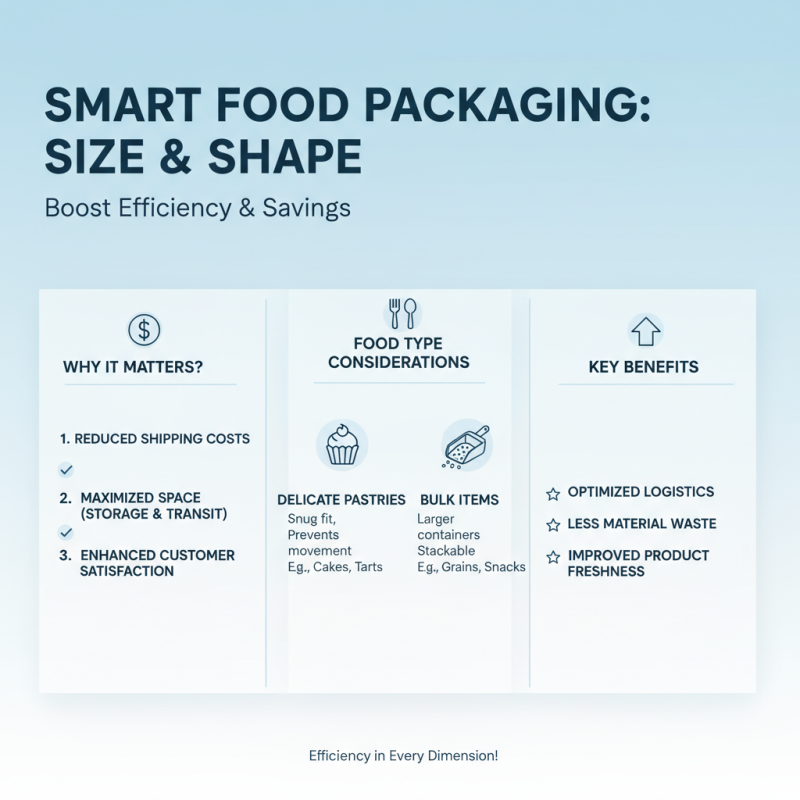
Choosing the right size and shape for food packaging boxes is crucial for efficiency. The dimensions of your packaging can affect everything from shipping costs to customer satisfaction. When selecting box dimensions, consider the types of food you offer. For instance, delicate pastries may require snug boxes to prevent movement. On the other hand, bulk items need larger packaging.
**Tips:** Measure your products carefully. Avoid overly large boxes, as they can lead to wastage. Small boxes are often more cost-effective but ensure they aren't too tight.
The shape of your packaging plays an equally important role. Square or rectangular boxes are versatile and stack well. However, unique shapes can capture attention and enhance brand identity. Reflect on your brand image when choosing. Keep in mind that intricate shapes can increase production costs and packaging time.
**Tips:** Test different shapes with your products. Getting feedback from customers is vital. Think about how the packaging will be stored or displayed. Every detail matters in creating a positive experience.
Evaluating Cost-Effectiveness of Packaging Options
When evaluating the cost-effectiveness of food packaging options, businesses must consider several factors. A budget-friendly choice is crucial, as packaging can significantly impact overall expenses. Selecting the right materials can reduce costs while maintaining quality. Think about using lightweight options to save on shipping fees. Recyclable materials may have higher initial costs but can attract eco-conscious consumers.
Another aspect is the design of packaging. Simple designs often cut down on production costs. However, that doesn't mean sacrificing brand identity. Eye-catching yet affordable designs can strengthen brand presence without overspending. Take time to explore various suppliers and compare quotes. Always look for hidden costs, such as shipping or minimum order requirements.
Balancing quality and price is essential. Some packages might look appealing but fail in durability. This can lead to damage and wasted products. Evaluate suppliers based on their reliability and product reviews. Don't hesitate to seek feedback from other businesses to refine your choices. Each decision should align with your long-term goals. Reflect on your business needs and consumer preferences constantly to adapt effectively.
How to Choose the Best Food Packaging Boxes for Your Business? - Evaluating Cost-Effectiveness of Packaging Options
| Packaging Type |
Cost per Unit ($) |
Durability (1-10) |
Eco-Friendliness (1-10) |
Suitability for Food (1-10) |
| Cardboard Boxes |
0.50 |
7 |
8 |
9 |
| Plastic Containers |
0.60 |
9 |
4 |
8 |
| Glass Jars |
1.20 |
10 |
9 |
10 |
| Biodegradable Packaging |
0.75 |
6 |
10 |
8 |
| Composite Containers |
0.80 |
7 |
7 |
9 |
Ensuring Compliance with Food Safety Regulations in Packaging
Choosing food packaging boxes involves understanding safety regulations. Compliance is crucial for protecting consumers. In the United States, the FDA governs food packaging standards. According to the FDA, more than 40% of food-related recalls stem from packaging issues. This statistic highlights the need for careful selection of packaging materials.
Selecting materials that meet safety standards is essential. Look for options that are BPA-free and recyclable. These materials reduce chemical migration into food. Additionally, packaging must withstand temperature fluctuations. This ensures food safety during transportation. As highlighted in a report by the Food and Beverage Packaging Association, 75% of consumers consider safety before purchasing food products.
**Tip:** Always verify certifications of your packaging suppliers. Ensure they comply with FDA regulations. This can help prevent compliance issues down the line.
Another area of concern is labeling. Accurate labeling is a legal requirement in many regions. Misleading labels can lead to legal actions. Over 30% of consumers check food labels for safety. This highlights their importance.
**Tip:** Include ingredient transparency on your packaging. It builds consumer trust and showcases your commitment to safety.
Food Packaging Compliance Levels by Material Type